A GLOBAL GUIDELINE AND WORKBOOK
A two-volume policy capability system for practitioners, graduate learners, faculty, and institutions.

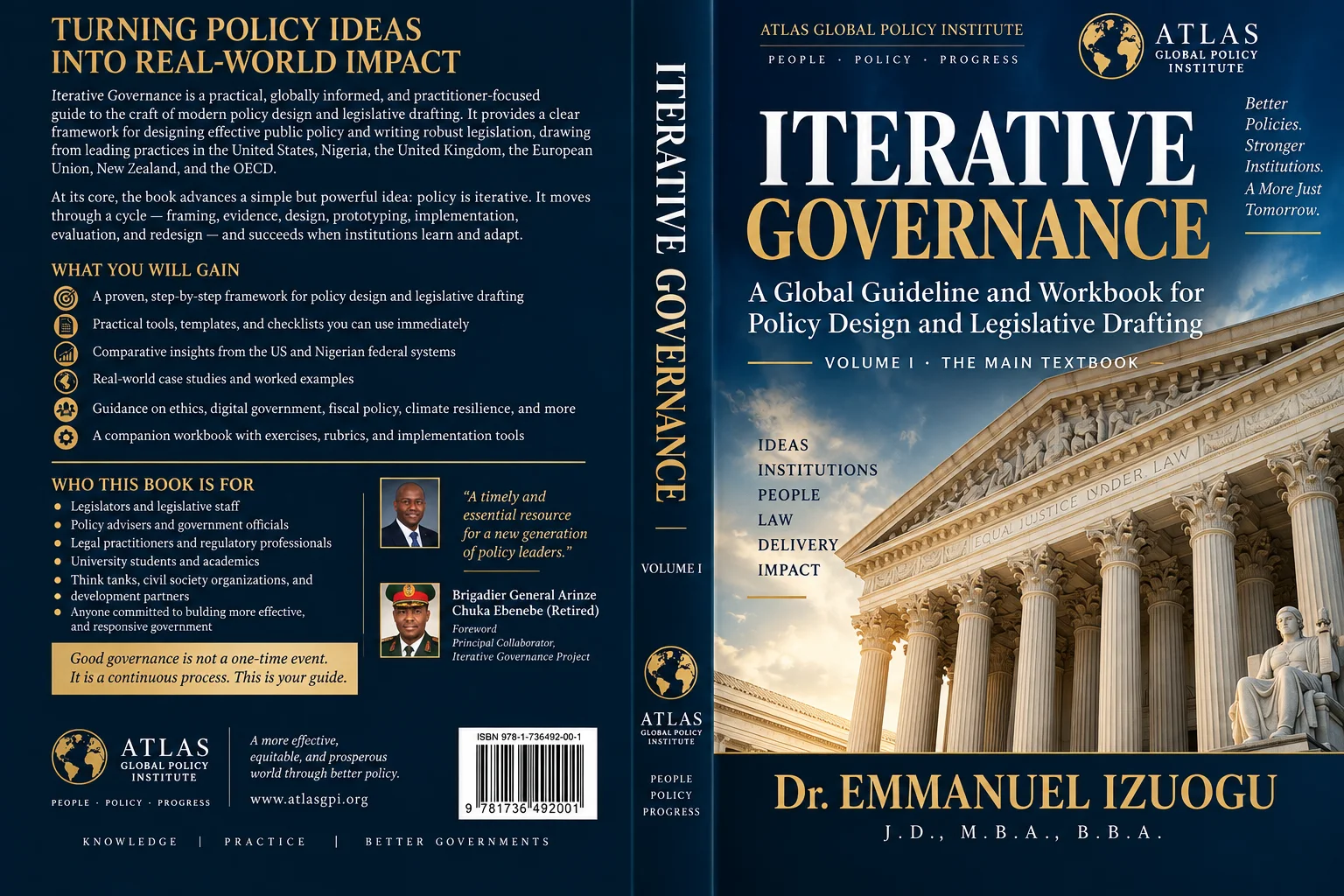
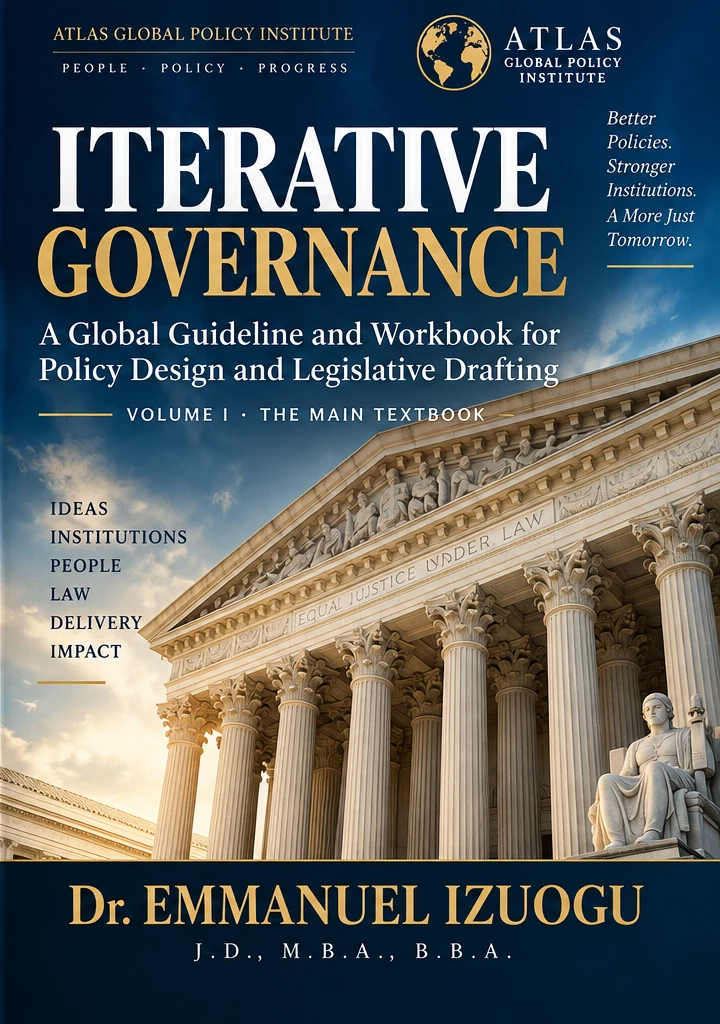
Promotional cover art from the supplied site package; the Amazon listing governs the published edition.
VOLUME I · THE MAIN TEXTBOOK
A Global Guideline for Policy Design and Legislative Drafting
by Dr. Emmanuel Izuogu
with Dr. Alex Uzokwe
Foreword by Brigadier General Arinze Chuka Ebenebe (Retired)
THE CENTRAL ARGUMENT
Between political intent and citizen experience sits a chain of framing, legal authority, institutional design, implementation, monitoring, and learning. Iterative Governance treats that chain as one system.
The method is deliberately iterative: policies are framed, designed, drafted, implemented, tested against evidence, and improved. The outcome is not simply a better document; it is a more adaptive and defensible public intervention.
WHAT THE READER BUILDS
The book is designed to support observable work products rather than passive reading alone.
Separate symptoms from structural causes, stakeholders, constraints, and implementation realities.
Align authority, incentives, resources, service delivery, safeguards, and evidence requirements.
Translate intent into legislative and regulatory language that can survive ambiguity, litigation, and administration.
Anticipate institutional bottlenecks and failure points before they reach citizens.
Specify what success looks like, what data matters, and how to learn from outcomes.
Build feedback and adaptation into the policy lifecycle instead of waiting for a post-mortem.
THE COMPANION PRACTICUM
Volume II is the performance layer. It converts the main text into guided exercises, analytical rubrics, scenario work, and drafting clinics for classroom, executive-education, and self-directed use.

BOOK IMAGERY & METHODOLOGY
Selected imagery from the book’s promotional design package, including its wraparound concept and practical learning storyboard.


CURRICULUM
Explore the published paperback on Amazon, request a sample update, or discuss faculty and institutional adoption.